
Klewenalp - Stockhütte: A Broad, Gentle Mountain Above the Lake
Klewenalp - Stockhütte combines a substantial vertical descent with a piste network weighted towards accessible skiing.

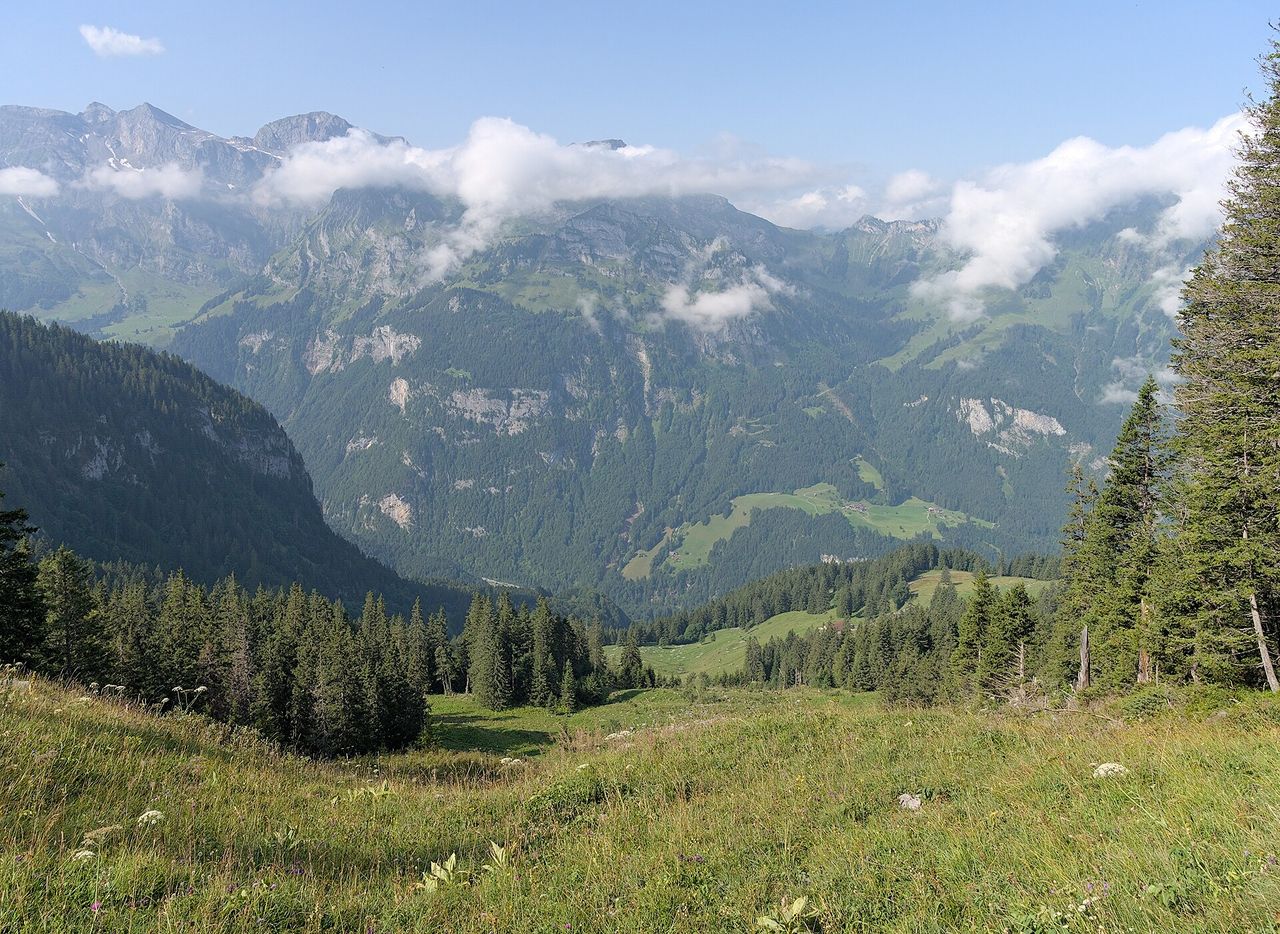
Klewenalp - Stockhütte sits on a mountain landscape shaped by the contrast between the lake and valley below and the higher, more open slopes above. Woodland gives way to broad alpine ground, while the linked areas around Klewenalp and Stockhütte create a distinctly family-oriented mountain character. It is the sort of setting where scenery and variety matter as much as steepness: the lower mountain feels connected to the valley, while the upper terrain opens out into a more spacious highland environment.
Free snow alerts
Choose your mountain. Get a free email when significant snowfall is forecast. Unsubscribe any time.
The mountain has a mapped vertical range from 778 m to 1,934 m, with a measured drop of 1,156 m. That vertical is in the top quarter of European resorts for this measure, giving intermediate skiers more scope for sustained descents than the resort’s gentle reputation might suggest. The piste picture is based on OpenStreetMap coverage via OpenSkiMap, rather than an operator’s official total: 72 mapped pistes amount to 17.9 km, including 12.4 km of blue or green terrain and 4.7 km of red terrain. In practical terms, that makes the area especially approachable for novices and developing skiers, while still offering red-graded runs for those building confidence.
The mapped lift network contains 20 lifts, including five cable cars and one gondola. Cable cars and the gondola account for 30% of the mapped lifts, one of the resort’s measured strengths, although the network also includes chairs, surface lifts and a magic carpet. For planning around the calendar, the season window supplied here runs from 20 December 2026 to 20 March 2027, but it is a typical window inferred from the terrain and latitude rather than an operator-published declaration. The climate record, meanwhile, covered 10 past winters: between December and March at 1,720 m, it recorded 340 cm of snow over 48 snow days, with the strongest fortnight recording 50 cm in the first half of March. That describes the past record only, not a forecast for the coming season.
The terrain profile points most clearly towards beginners, families and intermediate skiers: 73% of mapped piste was green or blue, while red runs supplied progression and longer descents. Expert skiers should note that no black terrain was mapped, and the 778 m base means valley runs depended on the freezing level. The supplied 90-day typical season was also short for this type of mountain, so the calendar deserves attention when weighing the resort against a particular trip.
- 1,156 m vertical drop, placing it in Europe’s top quarter for vertical descent
- 30% of mapped lifts are cable cars or a gondola
- 73% of mapped piste is green or blue
- 778 m base means valley runs depend on the freezing level
- 0 km of black terrain was mapped
- 90-day typical season is short for this terrain
Every figure here is measured by Skinow from OpenStreetMap, ERA5 and our own catalogue. The setting and background are general knowledge, not measurements.


